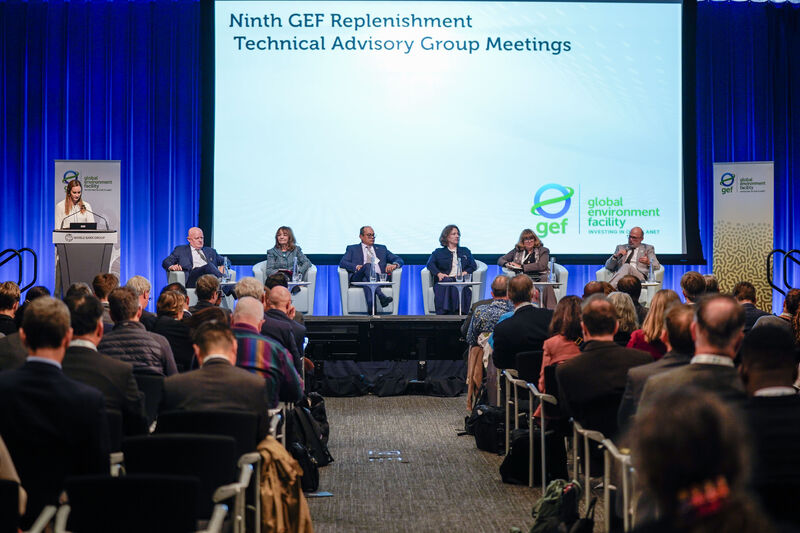
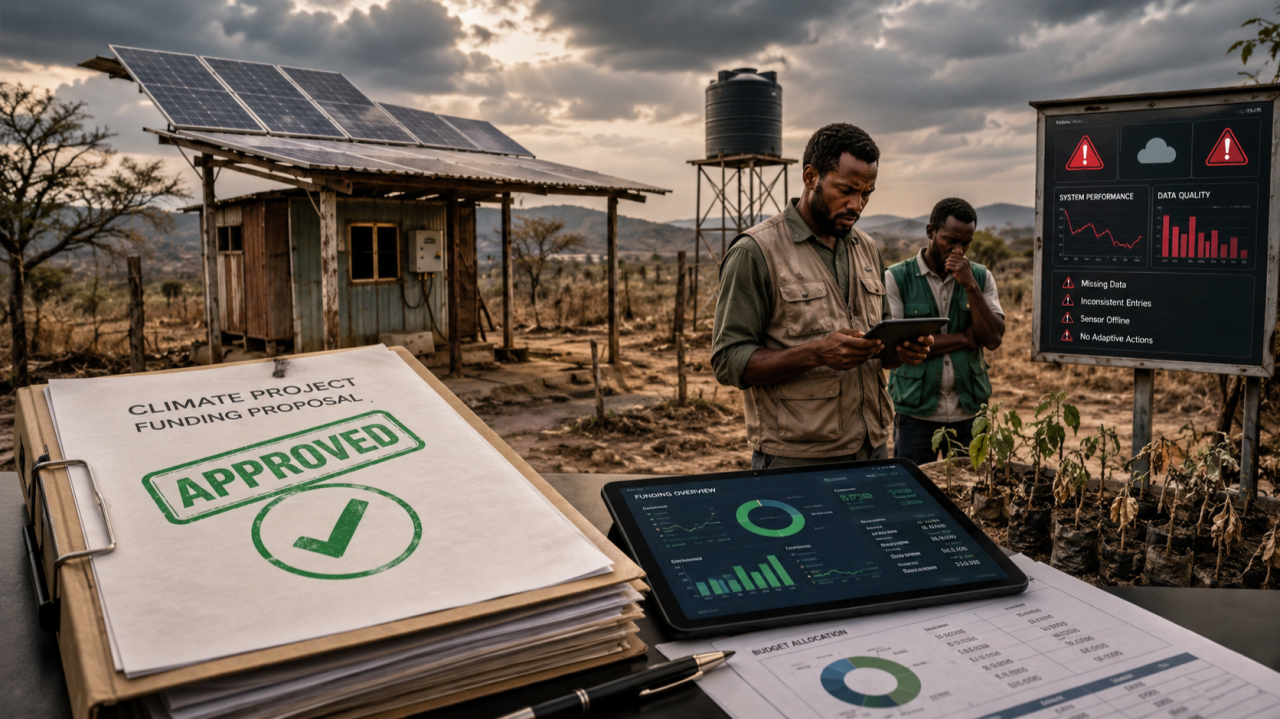
When a climate project is funded, there’s often a widespread assumption that the project will succeed, simply because it has financial backing. Funding approval, in many cases, is viewed as the final seal of success, signaling that the project is well on its way to contributing positively to environmental outcomes. However, this view is naive. The harsh reality is that many projects, even with funding in place, falter during implementation.
The issue isn’t the lack of financial resources, but the poor execution post-approval. It’s essential to understand that securing funding does not eliminate the risks that projects face. If anything, it introduces new challenges that need to be effectively managed. The key insight here is that funding approval is not the end of risk. Rather, it marks the beginning of a critical phase: accountability.
Common Breakdowns That Lead to Project Failures
1. Weak Monitoring Systems
One of the most significant causes of failure in climate projects is weak or nonexistent monitoring systems. Monitoring allows project managers to track progress, identify deviations, and take corrective action when needed. Without a robust system in place to assess the ongoing performance of a project, it becomes incredibly difficult to gauge whether the expected outcomes are being achieved.
Take, for example, the Green Climate Fund (GCF) projects aimed at reducing deforestation in tropical regions. While many of these projects receive funding, they often lack the necessary tools for tracking the long-term effectiveness of their interventions. Monitoring requires detailed data collection, periodic reviews, and regular assessments, which are often sidelined due to lack of resources or expertise.
A real-world example is the Reducing Emissions from Deforestation and Forest Degradation (REDD+) program in Indonesia. Despite receiving significant international financial support, monitoring systems were underdeveloped, and there were no standardized methods to track progress. Consequently, the data provided were inconsistent, leading to questions about the true effectiveness of the interventions. Ultimately, the inability to monitor performance accurately led to questions about the project’s long-term sustainability.
2. No Performance Tracking
Closely tied to monitoring systems, performance tracking is essential for measuring the success of climate projects. Without clear metrics and indicators to evaluate the project's impact, it becomes impossible to demonstrate whether the funding has been used effectively or whether the project has made meaningful progress towards its objectives.
A case study from Kenya’s Adaptation Fund, which sought to build climate-resilient infrastructure, highlights this issue. While the project received international backing, there was no concrete framework in place for measuring performance against the set targets. As a result, the impact of the project on local communities remained unclear, and questions were raised about whether the funds were utilized in the most impactful way.
Performance tracking also includes ensuring that the outputs align with the agreed-upon outcomes. In the absence of such tracking mechanisms, funds might be spent without achieving the desired impact, leaving the communities they were meant to help without tangible results.
3. Poor Field Data Quality
Another key breakdown point in climate projects is poor data quality, especially when it comes to field-level data. High-quality, real-time data collection is essential for assessing the effectiveness of interventions, understanding local conditions, and making data-driven decisions. Without accurate field data, it is impossible to make informed adjustments or identify potential pitfalls in the project’s execution.
In Africa, for example, the Africa Adaptation Programme faced significant setbacks due to issues with field data. In some regions, inadequate data collection methods hindered the ability to assess the severity of climate impacts, making it difficult to tailor the interventions to local needs. This lack of quality field data ultimately led to poor outcomes despite the large financial investments involved.
4. Lack of Adaptive Management
The ability to adapt and adjust project strategies based on ongoing observations and lessons learned is critical for climate project success. Unfortunately, many climate projects fail because they rely on rigid plans that are not flexible enough to accommodate changes in circumstances or emerging challenges. Adaptive management is a continuous process that allows projects to evolve in response to new insights or shifting conditions.
For example, in the Cote d'Ivoire Adaptation Project, a lack of adaptive management meant that the project could not adjust to unforeseen weather patterns and changes in local agricultural practices. While the project initially aimed to promote sustainable farming techniques, it quickly became evident that the local farmers had different needs due to unpredictable rainfall patterns. The failure to adapt to these changes resulted in a project that could not meet its intended goals.
The Consequence: Funds Are Spent, but Impact Is Unclear
The lack of effective monitoring, performance tracking, field data quality, and adaptive management often leads to one unavoidable consequence: funds are spent, but the impact remains unclear. This issue is particularly pervasive in climate finance because the scale of funding is often substantial, but the outcomes are harder to measure in the short term. As a result, millions of dollars are spent on projects that do not deliver the desired results or have a lasting effect on the communities they were intended to help.
The impact, or lack thereof, can leave stakeholders disillusioned. Donors may be hesitant to continue providing funding, and local communities may lose trust in the process. Furthermore, the failure to deliver meaningful outcomes can perpetuate a cycle of failed projects that undermines the credibility of climate finance as a whole.
The Need for Stronger Accountability Mechanisms
To avoid these breakdowns, it’s essential for project designers, funders, and implementers to put stronger accountability mechanisms in place. This includes the development of robust monitoring and evaluation frameworks, clear performance tracking systems, and adaptive management strategies. Moreover, fostering a culture of transparency and accountability is critical for ensuring that funds are used effectively.
Example from the GEF and World Bank:
A recent collaboration between the Global Environment Facility (GEF) and the World Bank provides an excellent example of integrating accountability throughout the project cycle. In their Sustainable Energy for All (SE4ALL) initiative, a rigorous framework was developed to monitor energy access and the associated climate benefits. The monitoring systems were designed to collect high-quality field data and to track performance metrics regularly, with built-in flexibility to adapt to changing circumstances. As a result, the initiative has seen significant success in terms of both energy access and reductions in greenhouse gas emissions, making it a model for future climate projects.
Conclusion: Funding Is Just the Beginning
While funding approval is an essential milestone in the lifecycle of a climate project, it should not be seen as the final step. It is merely the beginning of a much more complex and accountable process that requires rigorous monitoring, adaptive management, and accurate performance tracking. By understanding the hidden failure points and ensuring that projects are equipped with the tools to adapt, track, and monitor effectively, we can ensure that climate finance translates into lasting, measurable impact. Only then can we truly claim to be addressing the climate crisis in a meaningful way.
As the climate finance sector continues to grow, those at the forefront must embrace accountability as a cornerstone of their work. It is the only way to ensure that the funds we allocate are used efficiently and that the climate projects we support have the lasting impact that is so desperately needed.
Need support developing a climate finance proposal, donor strategy, or MEAL framework? Contact Agenda Beyond Borders for advisory support.
Author
Simon Okola
PhD Candidate in Project Financing | Climate Finance & MEAL Consultant | Helping NGOs, MFIs, SACCOs & Counties Become Climate-Finance Ready